
Technology & process
Prelithiation, developed against your material system
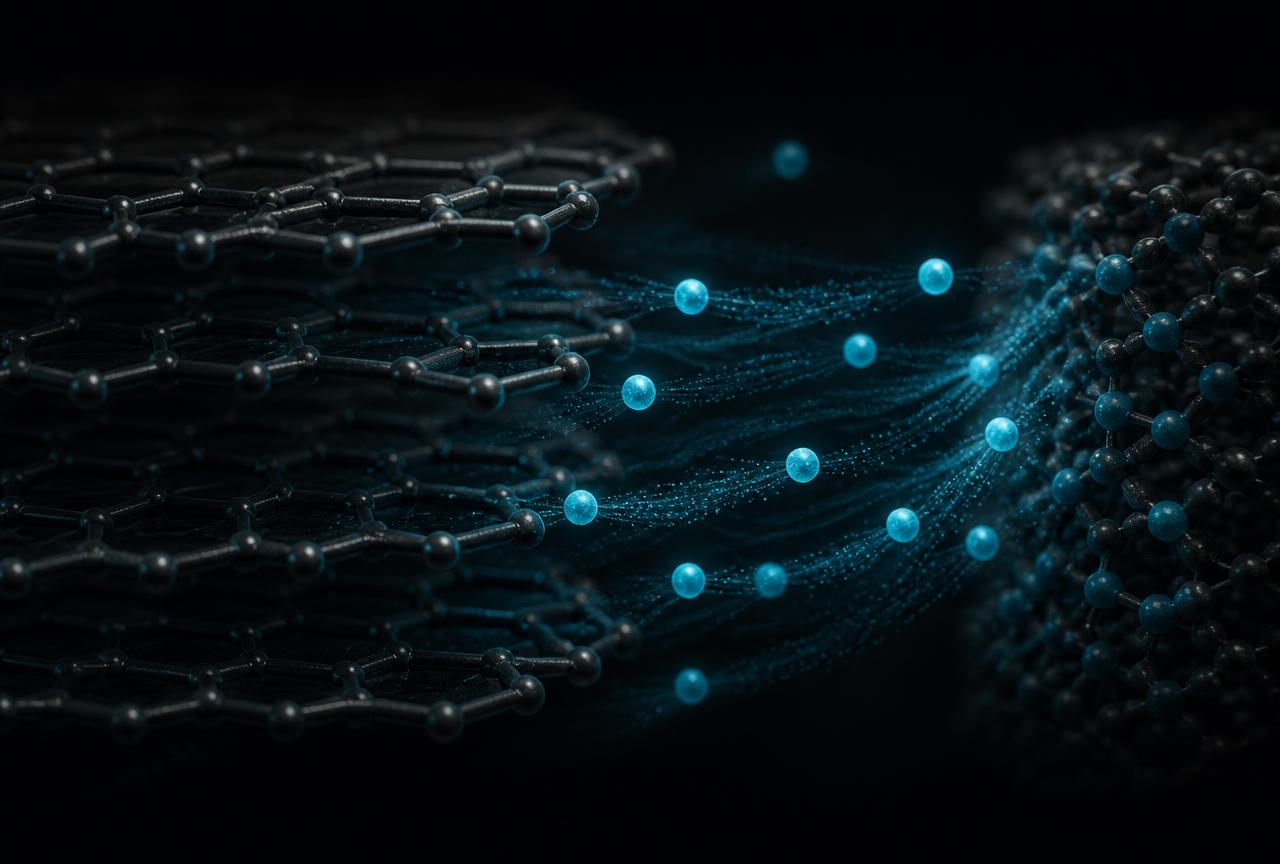
Prelithiation describes the controlled introduction of lithium into an electrode or cell component before normal cell operation begins. It is considered where lithium consumed in the first cycles limits usable energy density, or where new material combinations have to be validated.
Why it is considered
During the first charge and discharge steps, part of the available lithium is consumed and is no longer available for reversible cycling. Prelithiation is one of the approaches evaluated to address this, and it can also be used to investigate how materials, binders and electrolytes behave together under defined conditions.
Material-neutral scope
The technology scope is relevant to battery-cell chemistries that use lithium ions for energy transport or storage — including graphite, silicon, composite anodes and other advanced active materials. Universal compatibility is not implied: suitability depends on the material system, cell chemistry, performance target and process conditions.
Four approaches
Prelithiation methods and how they are compared
We work across all four approaches. Comparison and selection are part of the development work — no method is presented as always best.
| Method | Principle | Typically considered for | Points to evaluate |
|---|---|---|---|
| Electrochemical prelithiation | Lithium is introduced electrochemically using a controlled current and voltage profile. | Development work where lithium dosage has to be adjusted precisely and reproducibly. | Requires a suitable cell or process fixture, electrolyte compatibility and defined electrical settings. |
| Chemical prelithiation | Lithium is introduced via a chemical reaction with a lithium-containing reagent system. | Material screening and cases where an electrical process step is not preferred. | Reagent handling, reaction control and material compatibility have to be evaluated per system. |
| Direct-contact prelithiation | The electrode is brought into contact with a lithium source under defined conditions. | Electrode-level trials and comparative studies on prepared electrode sheets. | Contact conditions, atmosphere control and homogeneity require careful process definition. |
| Lithium-containing additives | A lithium source is added within the electrode formulation or cell components. | Approaches that aim to stay close to an existing electrode-production sequence. | Formulation, dispersion and interaction with binder and electrolyte have to be assessed. |
The correct approach depends on the material system, development stage, equipment environment, target performance and economic requirements. We recommend discussing your specific system so the comparison can be made against your own constraints.
Development workflow
Seven steps, in sequence
The workflow is designed to make experiments repeatable and comparable rather than to produce isolated single results.
- 01
Define target performance
Clarify the electrochemical and commercial targets that the development work should support.
- 02
Analyse materials and cell chemistry
Review active materials, binder and electrolyte system, electrode design and cell format.
- 03
Compare and select a prelithiation method
Weigh the available approaches against the material system, development stage and equipment environment.
- 04
Calculate preliminary lithium dosage
Derive a first dosage estimate to be verified experimentally.
- 05
Develop process parameters
Define electrical settings, treatment time, atmosphere and handling conditions for the trials.
- 06
Configure suitable laboratory equipment
Match electrode formats, throughput and monitoring needs to an equipment configuration.
- 07
Validate electrochemical results
Assess repeatability and comparability of results and refine the parameter set.
Capabilities
Process advantages
These are capabilities that support investigation and optimisation. They are not guaranteed outcomes.
- Precisely adjustable lithium dosage
- Adaptable process parameters
- Repeatable and comparable experiments
- Compatibility evaluation for different anode materials
- Binder and electrolyte optimisation
- Integration into existing development workflows
Adaptable
Project parameters
Parameters that can be adapted per project and documented for comparability.
- Electrode dimensions and formats
- Lithium dosage and electrical settings
- Process speed and treatment time
- Anode material and composition
- Binder and electrolyte system
- Atmosphere and moisture control
- Data collection and process monitoring
Objectives
Development objectives
Qualified objectives for development work. No fixed percentages are attached to them.
- Increase usable energy density
- Minimise initial capacity loss
- Improve cycle life and electrochemical stability
- Optimise active materials, binders, electrolytes, lithium dosage and process parameters
- Reduce technical decision time
- Establish a structured laboratory-development pathway
Binder and electrolyte optimisation
The binder holds the electrode structure together and the electrolyte governs ion transport and interface formation. Both interact strongly with the active material, so combinations are tested in a structured sequence rather than component by component. This work can be included in prelithiation-process development.
Coming soon
Lithium-dosage calculator for electrochemical prelithiation
A calculation tool for electrochemical prelithiation is under development and is not yet available on this site. Until then, a preliminary calculation can be discussed manually — describe your material system in the project form.
Related terms
Glossary
Short, qualified definitions of the terms used on this page.
In-depth articles on graphite prelithiation, silicon first-cycle loss, method comparison, lithium dosage and coulombic efficiency are collected in the prelithiation guides.
Discuss your project with a specialist
Share your material system and target performance. The first step is a free introductory expert call.